Showing posts with label stir fry. Show all posts

Sunday, June 5, 2016

Bhindi fry - Okra stir-fry


Bhindi or lady finger or okra is one of my favourite vegetables. I am so enticed by the simple flavours in the Punjabi dish version of this unique vegetable. With only a few ingredients and less than 20 min to prepare it, the flavours in this dish are worth talking about.


This green vegetable is slim as a lady's finger, so rightly called. It has a neutral taste but don't go by its simple looks, it is packed with fiber, Vitamins and minerals. When I had just gotten married I had no experience of cooking and even selecting vegetables while buying. I remember going to the supermarket and asking a lady to help me select the 'good' bhindi pods. In the store, select the pods that look crispy. One can check that by trying to break the tip of the pod. If it breaks with ease and a crunch, you have found the right bhindi. Also, choose the smaller pods, as they are fresher and tend to be free of worms and will have lesser or smaller seeds. Avoid the pods that look over-ripe, mushy, dull coloured or sunken. If you want your bhindi to be crispy and not slimy or mushy or lacy upon cooking, then you must wash the lady finger whole and then spread them on a newspaper or large cloth to dry overnight or at least an hour before chopping and cooking.


The recipe I am sharing today is a typical Punjabi way of cooking bhindi as a stir fry with lots of onions. Onions are sliced and a few small sized onions are added whole to the stir fry. Just a few slits on top and they are added to the wok. This one tastes great when cooked in slightly smoked mustard oil as it gives the strong pungent flavour of mustard to the bhindi.


Difficulty Level: Easy
Cooking Time: 20 min.
Serves: 4
Ingredients:


Lady finger (500 gm), washed and dried overnight or until completely free of moisture
2-3 onions, sliced
1-2 small-sized onions, whole
2-3 green chilies, chopped
1-2 green chilies, whole
1 tsp turmeric powder
1 tsp red chili powder
1/2 tsp amchur or dry mango powder
2-3 tbsp mustard oil
salt, to taste

Method:


1) Start by chopping the dried bhindi into one-inch pieces. Keep aside.


2) Heat mustard oil in a wok, Let it smoke a little and then turn of the gas.


3) Carefully put onions (both sliced and whole) to it and now turn on the gas.


Add in the green chilies and saute on low flame until onions look golden brown but not burnt.


4) Add all the spices and mix well. Put in the chopped bhindi. Mix well but be careful to not break the bhindi pieces. Saute for 2-3 min. Now cover the wok with a lid and allow the bhindi to cook for about 7-10 min.


5) Open the lid, saute and check if the bhindi is done. If not, cover and cook for another 3-5 min.


6) Serve hot with chapatti.


Hope you liked this simple recipe!


How do you like to make your bhindi?

Do you like the aloo-bhindi version - a stir-fry with potatoes or do you like it to keep it simple with loads of onions?

Tell me all, I'd love to know what you think!

Thanks for reading! :-)

Tuesday, March 29, 2016

Veg Chowmein

A good bowl of chowmein is my weakness. I am humbled to have grown up in meri dilli or Delhi where Indo-Chinese food is available everywhere in its most authentic form. Chowmein or noodles is the main flower in the beautiful bouquet of Indo-Chinese cuisine, which is hugely popular in India.


It is very typical of Delhi roadsides to have food carts, food trucks or vans selling Indo-Chinese food such as manchurian, chopsuey, hakka noodles - all Chinese dishes with an Indian tadka.

Chowmein or noodles are quick and easy to make and very nutritious. The more the vegetables the better it tastes and is healthy too. It is any kid's favourite meal and a much healthier and nutritious alternative to the packet noodles advertised on the television that claim to be ready in 2 minutes.

Of course, we love a piping hot plate of Maggi once in a while.

Since I started making this veg noodles at home I got rid of the guilt associated with cooking 2 minute meals which are barely nutritious.


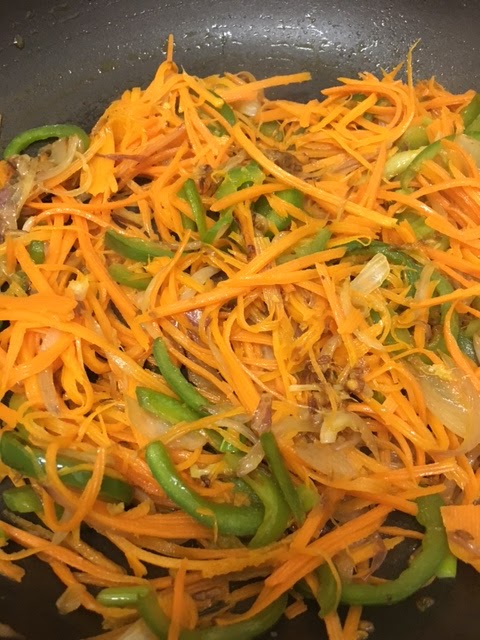
I love loading up my chowmein with different and colourful vegetables such as carrots, red, yellow and green bell peppers, cabbage, onions and spring onions. Sometimes my noodles also include mushrooms, broccoli, baby corn and sweet corn, if these veggies are in my fridge.

Little M is the reason I started cooking chowmein at home and the other reason is that in the UAE it is difficult to find authentic taste of dilliwali chowmein. Since my little boy so loves the noodles I hardly put chili sauce or green chili as I want him to enjoy and relish it. Sometimes after separating his share or packing enough for his school lunch box, I put in red chili sauce or slit green chilies to give it that dilliwala spicy tadka.

Difficulty: Easy
Prepping time: 15 min
Cooking time: 15 min


Ingredients:


2 tbsp ginger-garlic paste (I used finely chopped)
2-3 tbsp oil
3-4 stalks of spring onion, vertically sliced
1 onion, sliced
1/2 green capsicum, sliced
2 carrots, shredded
1/2 cup cabbage, shredded
2 tbsp soy sauce
1 tbsp white vinegar
1 tsp black pepper powder
1 tsp red chili powder
spring onion greens, for garnish
1 packet of noodles
2 tbsp red chili sauce/hot sauce (optional)
1/2 orange and yellow bell peppers, sliced (optional)

Method:


Before you put on the flame make sure that each ingredient is on the shelf including chopped or shredded veggies, sauces and seasonings. I think preparing the ingredients and getting them ready beforehand decreases stress, burns or accidents, and that way the cooking becomes more organised.

The chowmein is going to take a big wok and a medium to high flame and for you to keep stirring to avoid veggies to burn or become mushy. We want our veggies to be soft yet crunchy!

So first prepare all ingredients as chowmein is a quick dish and you will need to quickly add all ingredients to the stir fry process.

Boiling the noodles


1) In a pot put lots of water. Add 1 tbsp olive oil (or any other cooking oil) and a pinch of salt. Let it boil and then add the noodles. It would roughly take 2-4 minutes for the noodles to cook. But its best to refer the packet and prepare according to the kind of noodles you are using.


We need to cook the noodles half way to avoid them becoming mushy or sticky. Strain the noodle in a colander after it is half way boiled, and I also take the colander of noodles and strain it under running tap water to avoid the noodles from sticking. At this step I like to add 1 tbsp of oil to the noodles and mix well without breaking them. This ensures the noodles aren't sticky.


Set aside the boiled and strained noodles.


Stir frying the veggies:


You may use all of the veggies mentioned above or you may just do with onion, spring onion, carrot and capsicum. Make sure to add half the quantity of each vegetable when you are using many different veggies.


1) Start by heating up oil in a wide non-stick wok. On a medium to high flame, add ginger-garlic paste. Stir fry until the raw smell goes. (I used finely chopped ginger-garlic)


2) Add spring onions. Stir.


3) Onion slices need to be added without over cooking spring onions. Stir fry on medium to high flame.


3) Add in the carrots. I used both Indian red carrot and the orange carrot. :-) Stir fry.


4) Put the sliced bell peppers, cabbage. Stir fry.

On a low flame cover the wok for 2 min for the veggies to soften in steam.


5) Remove the lid and stir on high flame to remove moisture. Add in soy sauce, black pepper powder, red chili powder, salt to taste. Stir well.


6) Finally add the noodles and 1 tbsp vinegar. Using two kadchhi or spoons mix the noodles with the veggies tadka with a light hand. Be careful not to break the noodles!


Garnish with chopped spring onion greens and serve hot.


These can be eaten just like that or even accompanied with this Chili Tofu Gravy recipe or veg or chicken manchurian.


How do you like your noodles or chowmein?

Do you like it spicy like me and like to add in red chili sauce and lots of slit green chilies too?

Tell me all that is running in your mind about this recipe of chowmein!

I would love to read what you think!


Thanks for reading! :-)

Monday, March 28, 2016

Bandhgobi matar sabzi / Cabbage-peas stirfry


When we talk about Punjabi cuisine we end up drooling and thinking about the famed rajma chawal or butter chicken. We often forget the simple sabzi-roti combo which is eaten for lunch in most Punjabi households everyday.


Through this blog I want to share my love for all those sookhi sabzi (dry veg stir fry) recipes. So lets begin with one of my favourite bandhgobi matar sabzi. A simple stir fry of onion and tomatoes, seasoned with coriander powder, cooked in mustard oil to give it a pungent aroma. The stir fry is then steamed to let the cabbage and peas soften. It is super healthy from the way it is cooked as this sabzi is prepared on low flame throughout the process. Once again this recipe comes straight from my mother's kitchen with not even a bit of tempering from my side. It is just how my mom makes it.

Preparation time: 15 min
Cooking time: 20 min
Difficulty level: Easy

Ingredients:


2 cups cabbage, shredded or julienne
1 cup peas
1 onion, finely chopped
1 tomato, finely chopped
2 green chilies, finely chopped
3-4 tbsp mustard oil
1 tsp red chili powder
1 tsp coriander powder
salt, to taste
coriander leaves, for garnish

Method:

1) Start by heating mustard oil in wok. Let it burn a little and then turn off the gas.


2) Carefully put chopped onions. Turn on the gas and let it sizzle on low flame.


3) We don't want the onions to be brown. Add finely chopped tomatoes and green chilies when the onion turn translucent and pinkish.


4) Sauté till the tomatoes seem to have a paste-like consistency. You will notice the oil has separated from tomatoes. At this stage add in salt, red chili powder and coriander powder. Sauté.


5) Time for the shredded cabbage to go in. Stir and mix well with the tadka.


6) Add the peas. Mix well and cover and let it steam till it softens, stirring every now and then.


Garnish with chopped coriander leaves. Serve with hot phulka or chapatti and some pudina chutney or a bowl of curd.


Enjoy this yummy sabzi fresh off the kadhai or wok as a lunch or pack it for office.


You may even make a paratha roll by using bandhgobi matar sabzi as a stuffing into parathas and pack it for kids school lunch box.


What do you think about this bandhgobi matar sabzi?

How do you make your cabbage?

Write your thoughts in the comment section below!

I would love to read what you think!

Thanks for reading! :-)

Sunday, March 13, 2016

Aloo Methi sabzi (Fenugreek potato stir-fry)


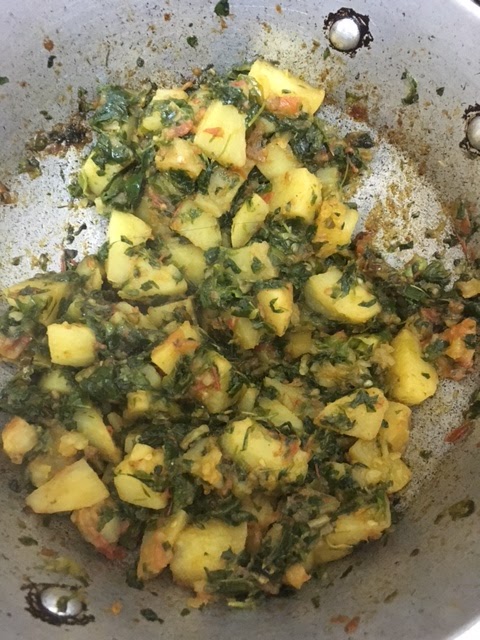
Aloo Methi sabzi or potato and fenugreek leaves stir fry is another gem from the North Indian cuisine. The aloo-methi has a lot of flavour with the bitterness of methi and softness and sweetness of potatoes. This is the reason why this Punjabi dish is cooked with minimal ingredients. Only a handful of goodies go into this rich, aromatic yet humble dish

I have grown up seeing my mother make most of the sabzi(s) (stir fry veggies) in the mustard oil just like my late grand mother. Which made me wonder why mustard oil for veggies? When I started cooking and sometimes used to make sabzi in normal cooking oil I could feel the difference. The taste of mustard would be missing and the stir fry vegetables would seem flavorless.

Cooking in slightly burnt mustard oil adds its own pungent bitterness to a stir fry and makes the dish all the more flavorful with its taste of mustard.


Methi or fenugreek has its own bitter dense fragrance. It is one of my favourite food fragrance and I can tell any dish only by smelling at it that it has got sookhi methi or kasoori methi (or dry fenugreek leaves roasted and crushed).

This green vegetable is packed with nutrition and is a rich source of iron, folic acid and fiber. It is available in Delhi in the winter season.

Taking a stroll down my parents' home I can smell the fragrance of methi being prepared for breakfast as methi parathas (See my mother-in-law's methi paratha recipe here) or as a veg stir fry or being added to curry or daal to lend it a bitter, aromatic and roasted flavour.

Here is the complete recipe to make this super quick and simple dish that evokes the memory of a cold winter morning from my childhood, just how my mother makes it!

Ingredients:


Methi leaves 3-4 cups, plucked, washed and chopped
3-4 medium-sized potatoes, cubed
2 medium-sized tomatoes, finely chopped
3-4 tbsp mustard oil
2-3 green chilies, chopped
1 tsp coriander powder
1 tsp red chili powder
salt, to taste

Cooking time: 30min
Preparation time: 15min
Serves: 4

Method:

1) Take a big wok and pour in 2-3 tbsps of mustard oil. Let it burn a little and then turn of the gas.


2) Carefully put finely chopped tomatoes and green chili into it. Turn on the gas and saute it on medium flame.


3) When the tomatoes seem to have got a paste-like consistency, you will notice the oil has separated from it. At this stage add in salt, red chili powder and coriander powder. Stir.


 4) Time for the cubed potatoes to go in. Mix well with the tadka. On low flame, cover for 3-4 min for the potatoes to soften, stir in between to avoid potatoes from burning.


5) Now add in the methi leaves! Stir well and cover for 5-10 min, stirring every now and then.


Aloo-methi sabzi is ready!


Serve hot fresh chapattis or paratha!


How do you like to cook your methi sabzi? What are the other ways you use these wonderful fenugreek leaves? In making puri, paratha or mathri? Or do you love adding kasoori methi to your daal makhni and soups?

Please do share your thoughts about this recipe with me.


Thanks for reading! :-)