Showing posts with label punjabi food. Show all posts

Monday, June 27, 2016

Chicken Kadhai


Gravy-based thick dishes delight me so much. They have simple ingredients, are easy to make and make you feel 'home' instantly. Any problem on your mind can be solved with a bowl of curry and some fresh chapatis to scoop and dunk into it. The dark consistency, the right blend of spices and add to that some fresh ingredients and your curry is ready in less than an hour.

North Indian at heart, Chicken Kadhai is a dish that is cooked in so many ways by adding capsicum and whole spices like cloves, bay leaf, cardamom. I think after Dal Makhani (see the recipe for making restaurant-style Dal Makhani hereand butter chicken, this should be the most-ordered dish in any restaurant serving Punjabi or North Indian food. The simplicity of this recipe makes it stand out and is the reason why most of the times when we have chicken at home, I end up cooking this or the biryani.


Chicken kadhai is one such curry-based dish that we enjoy scooping with soft chapatis. I abstain from eating it with parathas since I find this dish a bit on the heavier side. It doesn't have any milk-based thickeners such as cream or milk or yoghurt but the amount of spice powders in this dish can make it hard to handle if you eat too much of it. Albeit once tasted, its simply hard to resist another serving. Go ahead and try it with naan or paratha or even mix it up with some steamed rice and immerse yourself in other interpretations of this dish.


Here is how I make my Chicken Kadhai which is a favourite at home and this recipe guarantees a love-filled whatsapp from husband when I pack it for him in his lunch!

Prepping Time: 15 min
Cooking Time: 30 min
Difficulty Level: Easy


Ingredients:

Chicken pieces: 1 kg (skinless, bone in)
6-7 onions, sliced or quartered
4-5 tomatoes, pulped
6-7 green chilies
4-5 tbsp garlic, finely chopped
2-3 tbsp ginger, finely chopped
4-5 tbsp Cooking oil
1 tsp red chili powder
2 tsp coriander powder
1/2 tsp turmeric powder
1 tsp chicken masala
salt, to taste

Method:


1) In a thick bottom and wide wok, add oil, fry the chopped garlic until translucent stirring all the time, add chopped ginger. When that browns slightly, add sliced onions. On a low flame, fry onions until brown. Keep stirring to make sure they don't stick to the bottom or they might burn.
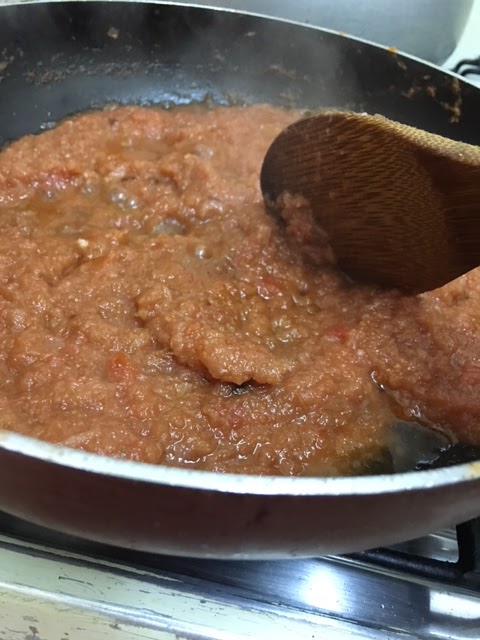
2) Add in pulped tomatoes and green chilies. I grind the green chilies but you can add it chopped or sliced into two. When the tomatoes gravy separate from the oil, put red chili powder, salt, turmeric powder, coriander powder and chicken masala. Let the masala cook with the gravy for a minute.
3) Finally put the chicken pieces, a small bowl of water and cover with a lid for 10 min. Open and check if the the chicken is done. If chicken still doesn't leave the bone, cover and cook for 10 min more. Garnish with coriander leaves and serve with hot chapatis.


 Thanks for reading! :-)

Wednesday, June 15, 2016

Dal Makhani


Raise your hand if you have not tasted this epic North Indian dish - Dal Makhani yet! Raise both hands and go run like this to a roadside dhaba or a small Indian restaurant near you and dig in to this divine dish. 


Believe me this is no punishment, only a reward. Dal Makhani is a creamy Punjabi lentil curry simmered and slow cooked until the black gram lentils and kidney beans almost turn to a mush


It is generally cooked with lots of butter and then finally smooth layers of cream are added to finish this aptly titled 'Dal Makhani'.


Makkhan in Hindi translates as butter in English and in India, especially Punjab, a lot of dishes have "Makhani" added to their name.


Their are some very rich gravy dishes with Makkhan cooked in Punjabi style like Paneer Makhani (cottage cheese cooked in butter and cream and tomato gravy) or Murg Makhani (Chicken in a thick creamy buttery sauce).


Usage of dairy products like milk, cream, butter, ghee (clarified butter) and paneer (cottage cheese) is profound in Punjabi cooking. Almost all Punjabi dishes have either one or more of these dairy products in them.

Before I share the recipe here, let me say that like many slow-cooked recipes, Dal Makhani turns out best when you take your time to cook it at leisure. It is not a dish in a jiffy and making it is time-consuming but once you scoop it with pillow-y bites of layered parathas (pan-fried flatbread), you forget about the time and effort put into making it.


I love eating my dal out of the fridge next morning served with hot parathas fresh off the tawa. Believe me, it tastes even better the next morning. This is the way breakfast has been happening at my naani's (grandma's house) since my childhood. Leftover dal from the night served with hot fluffy parathas.

Since it takes long for the black gram lentils and kidney beans to cook, I use a pressure cooker and soak both overnight in water.

Prepping Time: 8 hours
Cooking Time: 1 hour


Ingredients:


Black lentils (whole): 3/4th cup
Kidney Beans: 1/4th cup
4-5 tbsp butter
2-3 cloves
1tsp cumin
2 green cardamom
1 black cardamom
1 bay leaf
1 medium onion, finely chopped
2 tbsp ginger-garlic paste
2 tomatoes, pulped
4-5 green chilies
1 tsp red chili powder
1 tsp coriander powder
1 tsp turmeric powder
salt, to taste
coriander leaves, for garnish
cream 3-4 tbsp

Method:


1) A night before or at least 4-5 hours before cooking soak black gram and kidney beans in enough water to speed up the cooking.


2) In a pressure cooker, heat four cups of water. Add some salt, turmeric powder and pressure cook for on medium to low flame for about 30 min.


3) Take a pan, heat butter with just a tbsp cooking oil to avoid it from getting burnt.


4) Now add bay leaf, cloves, cardamom.


5) Put in the cumin seeds and stir until it changes colour and you smell a nice roasted fragrance of cumin.


6) Add chopped onions. Stir fry.


7) Until the onions brown, prepare ginger-garlic paste. Keep aside.


8) Keep checking on the onions and stir. Meanwhile, blend together tomatoes and green chili.


9) Set aside the tomato-green chili paste.


10) Stir the onions.


 11) When onions look like such....


 12) ...put in the ginger-garlic paste and stir fry until the raw smell disappears.


13) Now add in the tomato-green chili pulp.


14) Stir well. When tomatoes seem to be cooked and left some oil on the side, its done.


15) Now add in the red, chili powder, coriander powder, salt. Stir and saute for 2 min.


16) When it looks like this, your tadka is ready! Once the pressure cooker releases its steam, open carefully and add the dal to the tadka. Do not add all the remaining water. You can add it later in parts when the dal is simmering with the tadka. It should be thick and not runny so add little water every then and now. When the dal seems to be mixed well with the tadka, add in the cream and turn off the gas.


Serve hot with paratha or fuluffy phulkas (chapati)!


How do you like to eat your dal?
With parathas or naan? 
Tell me all, I'd love to read what you think!


Thanks for reading! :-)

Monday, March 28, 2016

Bandhgobi matar sabzi / Cabbage-peas stirfry


When we talk about Punjabi cuisine we end up drooling and thinking about the famed rajma chawal or butter chicken. We often forget the simple sabzi-roti combo which is eaten for lunch in most Punjabi households everyday.


Through this blog I want to share my love for all those sookhi sabzi (dry veg stir fry) recipes. So lets begin with one of my favourite bandhgobi matar sabzi. A simple stir fry of onion and tomatoes, seasoned with coriander powder, cooked in mustard oil to give it a pungent aroma. The stir fry is then steamed to let the cabbage and peas soften. It is super healthy from the way it is cooked as this sabzi is prepared on low flame throughout the process. Once again this recipe comes straight from my mother's kitchen with not even a bit of tempering from my side. It is just how my mom makes it.

Preparation time: 15 min
Cooking time: 20 min
Difficulty level: Easy

Ingredients:


2 cups cabbage, shredded or julienne
1 cup peas
1 onion, finely chopped
1 tomato, finely chopped
2 green chilies, finely chopped
3-4 tbsp mustard oil
1 tsp red chili powder
1 tsp coriander powder
salt, to taste
coriander leaves, for garnish

Method:

1) Start by heating mustard oil in wok. Let it burn a little and then turn off the gas.


2) Carefully put chopped onions. Turn on the gas and let it sizzle on low flame.


3) We don't want the onions to be brown. Add finely chopped tomatoes and green chilies when the onion turn translucent and pinkish.


4) Sauté till the tomatoes seem to have a paste-like consistency. You will notice the oil has separated from tomatoes. At this stage add in salt, red chili powder and coriander powder. Sauté.


5) Time for the shredded cabbage to go in. Stir and mix well with the tadka.


6) Add the peas. Mix well and cover and let it steam till it softens, stirring every now and then.


Garnish with chopped coriander leaves. Serve with hot phulka or chapatti and some pudina chutney or a bowl of curd.


Enjoy this yummy sabzi fresh off the kadhai or wok as a lunch or pack it for office.


You may even make a paratha roll by using bandhgobi matar sabzi as a stuffing into parathas and pack it for kids school lunch box.


What do you think about this bandhgobi matar sabzi?

How do you make your cabbage?

Write your thoughts in the comment section below!

I would love to read what you think!

Thanks for reading! :-)

Wednesday, March 16, 2016

Rajma Chawal or Red Kidney Beans with Rice


Rajma chawal is a very famous North Indian dish cooked frequently in almost all Punjbai households every week. It is a staple dish, when mothers in North India are setting menu for a get-together. It is that dish that takes away all the attention from the other dishes cooked at a family dinner, no matter what it may be.

When you ask what's for lunch/dinner today? Rajma chawal is the answer that just makes your eyes brighten and smile widen. It is something that is liked and loved by one and all at home. Some like to eat their rajma chawal with a lot of thick gravy, while others may want more of rajma to appear alongside their rice. Some like to have it with aam ka achaar or mango pickle while others like to eat it with a salad of onions sprinkled with lemon juice and salt. Some like rajma chawal with raw whole green chilies in their plate while others like it with some pudina chutney or mint dip. Everyone has a way of relishing their own plate of rajma chawal and long discussions are carried over how they like to eat their rajma chawal.


For a Punjabi, rajma chawal is not just food. It is a feeling, an emotion. It is something siblings fight over. Who finished the leftover rajma chawal I carefully put into the fridge last night? It is something children make a scene over when they come back from school. Mom, why didn't you save some rajma chawal for me or why didn't you cook rajma chawal today?

These were the questions I and my siblings have grown up asking and creating a scene and picking up a fight over. :-)


I make it a point to always cook some extra rajma chawal. I love the taste of the rajma my mother cooks and how I make rajma is totally inspired by her recipe. Though the ones I make, taste very similar to that of my mom's rajma but then they only taste similar. The real taste of my mom's rajma which is never over-cooked that every bean of rajma can be seen intact, the gravy is never too thick neither too watery. The spices are never too much nor it tastes bland. It is always the perfect taste. Tender, rich, drool-worthy and just awesome.

Rajma are high in protein and full of carbohydrates. It is cooked with a lot of whole spices and a thick gravy of onions and tomatoes, stewed over low flame for a long time. Rajma is one of the staple foods in North India loved religiously by everyone. Rajma is mostly served with boiled rice and thus the combination 'rajma-chawal' came into being. However, rajma tastes equally great with hot parathas or flatbread and phulkas or chapattis. My mother always makes rajma early in the morning and serves fresh, hot and bubbling bowls of these red kidney beans with hot and crunchy parathas slathered with homemade butter and hari mirch ka achaar or green chili pickle. It is one thing I used to love waking up to before my marriage. :-)


Many cute jokes and sweet one-liners are based around this beautiful dish. One of them is "I can't make everyone happy. After all, I am not Rajma Chawal." :-) Here is another one: "Whenever life seems difficult. When things all seem to be going wrong. When the world is against you. Just eat rajma chawal." :-)

Let me share with you how I make this delicious curry step by step accompanied with lots of pictures. Once again my recipe is stolen from my mother. :-)

Ingredients:

1 cup Rajma or kidney beans soaked overnight or atleast for 2-4 hours
2-3 onions, grinded
4 tomatoes, grinded
4-5 garlic cloves, peeled
4-5 green chilies
1 tsp red chili powder
1 tsp coriander powder
2 tsp turmeric powder
1 tsp garam masala or all spice powder (optional)
salt, to taste
4-5 tbsp cooking oil
coriander leaves, chopped
5 cups water

Serves: 4
Prepping time: 15-20 min
Cooking time: 40-60 min
Difficulty level: Easy

Method:

Boiling and pressure cooking the rajma:


1) Take a large pressure cooker. Add water and bring to boil. Now add the soaked rajma. Put the whole garlic cloves with 1 tsp of turmeric powder and salt, to taste.

2) Put on the lid and let it whistle 4-5 times on high and then keep it on low flame for 20 min. Switch off the gas and do not open the lid until all moisture evaporates.


Making the tadka or curry:

1) While the rajma is whistling away in the pressure cooker. Heat oil in a non-stick pan. Add the onion paste and let it brown on low flame until brown. Saute in between.


 2) While the onions are browning. Grind the tomatoes and green chilies to form a puree in a blender.


3) Keep the tomato puree ready and add to the browned onion paste.


4) Mix well and cook on low flame.


5) When the oil separates from the tomatoes, the tadka will look like this:


 6) At this stage add your spices - turmeric powder, red chili powder, coriander powder and salt. I don't use garam masala as I find it too spicy for Little M. Mix well.


7) When all of the steam has evaporated, open the pressure cooker and with a spoon take out the garlic cloves. You can totally skip this step and just try to mash the garlic cloves inside the cooker.


8) Add the garlic cloves to the tadka. Mash and mix well.


9) The tadka is now ready to be added to the rajma.


10) Add the tadka to the pressure cooker. Mix well and bring to boil.


Tips:

* If you find it water, let it boil uncovered for a good 10 min and it will thicken.

* Check your rajma if its cooked by trying to mash using a spoon. If you think its still uncooked. Put the lid back on the pressure cooker and let it whistle for 10-15 min on medium flame.

* To cut the cooking time of rajma, make sure to soak it overnight.


Finally add the chopped coriander leaves.


Serve hot with freshly boiled basmati rice.


How do you like to eat your plate of rajma chawal?

Do you like to make it watery or you prefer a thick gravy?

Do you like to include some ginger in your tadka?

Tell me all about your secret recipe for cooking rajma.

I would love to read your thoughts..


 Thanks for reading! :-)