Showing posts with label main course. Show all posts

Wednesday, June 15, 2016

Dal Makhani


Raise your hand if you have not tasted this epic North Indian dish - Dal Makhani yet! Raise both hands and go run like this to a roadside dhaba or a small Indian restaurant near you and dig in to this divine dish. 


Believe me this is no punishment, only a reward. Dal Makhani is a creamy Punjabi lentil curry simmered and slow cooked until the black gram lentils and kidney beans almost turn to a mush


It is generally cooked with lots of butter and then finally smooth layers of cream are added to finish this aptly titled 'Dal Makhani'.


Makkhan in Hindi translates as butter in English and in India, especially Punjab, a lot of dishes have "Makhani" added to their name.


Their are some very rich gravy dishes with Makkhan cooked in Punjabi style like Paneer Makhani (cottage cheese cooked in butter and cream and tomato gravy) or Murg Makhani (Chicken in a thick creamy buttery sauce).


Usage of dairy products like milk, cream, butter, ghee (clarified butter) and paneer (cottage cheese) is profound in Punjabi cooking. Almost all Punjabi dishes have either one or more of these dairy products in them.

Before I share the recipe here, let me say that like many slow-cooked recipes, Dal Makhani turns out best when you take your time to cook it at leisure. It is not a dish in a jiffy and making it is time-consuming but once you scoop it with pillow-y bites of layered parathas (pan-fried flatbread), you forget about the time and effort put into making it.


I love eating my dal out of the fridge next morning served with hot parathas fresh off the tawa. Believe me, it tastes even better the next morning. This is the way breakfast has been happening at my naani's (grandma's house) since my childhood. Leftover dal from the night served with hot fluffy parathas.

Since it takes long for the black gram lentils and kidney beans to cook, I use a pressure cooker and soak both overnight in water.

Prepping Time: 8 hours
Cooking Time: 1 hour


Ingredients:


Black lentils (whole): 3/4th cup
Kidney Beans: 1/4th cup
4-5 tbsp butter
2-3 cloves
1tsp cumin
2 green cardamom
1 black cardamom
1 bay leaf
1 medium onion, finely chopped
2 tbsp ginger-garlic paste
2 tomatoes, pulped
4-5 green chilies
1 tsp red chili powder
1 tsp coriander powder
1 tsp turmeric powder
salt, to taste
coriander leaves, for garnish
cream 3-4 tbsp

Method:


1) A night before or at least 4-5 hours before cooking soak black gram and kidney beans in enough water to speed up the cooking.


2) In a pressure cooker, heat four cups of water. Add some salt, turmeric powder and pressure cook for on medium to low flame for about 30 min.


3) Take a pan, heat butter with just a tbsp cooking oil to avoid it from getting burnt.


4) Now add bay leaf, cloves, cardamom.


5) Put in the cumin seeds and stir until it changes colour and you smell a nice roasted fragrance of cumin.


6) Add chopped onions. Stir fry.


7) Until the onions brown, prepare ginger-garlic paste. Keep aside.


8) Keep checking on the onions and stir. Meanwhile, blend together tomatoes and green chili.


9) Set aside the tomato-green chili paste.


10) Stir the onions.


 11) When onions look like such....


 12) ...put in the ginger-garlic paste and stir fry until the raw smell disappears.


13) Now add in the tomato-green chili pulp.


14) Stir well. When tomatoes seem to be cooked and left some oil on the side, its done.


15) Now add in the red, chili powder, coriander powder, salt. Stir and saute for 2 min.


16) When it looks like this, your tadka is ready! Once the pressure cooker releases its steam, open carefully and add the dal to the tadka. Do not add all the remaining water. You can add it later in parts when the dal is simmering with the tadka. It should be thick and not runny so add little water every then and now. When the dal seems to be mixed well with the tadka, add in the cream and turn off the gas.


Serve hot with paratha or fuluffy phulkas (chapati)!


How do you like to eat your dal?
With parathas or naan? 
Tell me all, I'd love to read what you think!


Thanks for reading! :-)

Sunday, June 5, 2016

Bhindi fry - Okra stir-fry


Bhindi or lady finger or okra is one of my favourite vegetables. I am so enticed by the simple flavours in the Punjabi dish version of this unique vegetable. With only a few ingredients and less than 20 min to prepare it, the flavours in this dish are worth talking about.


This green vegetable is slim as a lady's finger, so rightly called. It has a neutral taste but don't go by its simple looks, it is packed with fiber, Vitamins and minerals. When I had just gotten married I had no experience of cooking and even selecting vegetables while buying. I remember going to the supermarket and asking a lady to help me select the 'good' bhindi pods. In the store, select the pods that look crispy. One can check that by trying to break the tip of the pod. If it breaks with ease and a crunch, you have found the right bhindi. Also, choose the smaller pods, as they are fresher and tend to be free of worms and will have lesser or smaller seeds. Avoid the pods that look over-ripe, mushy, dull coloured or sunken. If you want your bhindi to be crispy and not slimy or mushy or lacy upon cooking, then you must wash the lady finger whole and then spread them on a newspaper or large cloth to dry overnight or at least an hour before chopping and cooking.


The recipe I am sharing today is a typical Punjabi way of cooking bhindi as a stir fry with lots of onions. Onions are sliced and a few small sized onions are added whole to the stir fry. Just a few slits on top and they are added to the wok. This one tastes great when cooked in slightly smoked mustard oil as it gives the strong pungent flavour of mustard to the bhindi.


Difficulty Level: Easy
Cooking Time: 20 min.
Serves: 4
Ingredients:


Lady finger (500 gm), washed and dried overnight or until completely free of moisture
2-3 onions, sliced
1-2 small-sized onions, whole
2-3 green chilies, chopped
1-2 green chilies, whole
1 tsp turmeric powder
1 tsp red chili powder
1/2 tsp amchur or dry mango powder
2-3 tbsp mustard oil
salt, to taste

Method:


1) Start by chopping the dried bhindi into one-inch pieces. Keep aside.


2) Heat mustard oil in a wok, Let it smoke a little and then turn of the gas.


3) Carefully put onions (both sliced and whole) to it and now turn on the gas.


Add in the green chilies and saute on low flame until onions look golden brown but not burnt.


4) Add all the spices and mix well. Put in the chopped bhindi. Mix well but be careful to not break the bhindi pieces. Saute for 2-3 min. Now cover the wok with a lid and allow the bhindi to cook for about 7-10 min.


5) Open the lid, saute and check if the bhindi is done. If not, cover and cook for another 3-5 min.


6) Serve hot with chapatti.


Hope you liked this simple recipe!


How do you like to make your bhindi?

Do you like the aloo-bhindi version - a stir-fry with potatoes or do you like it to keep it simple with loads of onions?

Tell me all, I'd love to know what you think!

Thanks for reading! :-)

Thursday, April 21, 2016

Baingan Bhadta or Roasted Eggplant


Punjabi cooking
is interesting as a number of methods are used in cooking different kinds of food. From deep-frying in huge woks to roasting a flat round chapatti in a tandoor (clay oven), unique methods used in North Indian cooking make the process intriguing and leave the dish tasting authentic and unique.
 

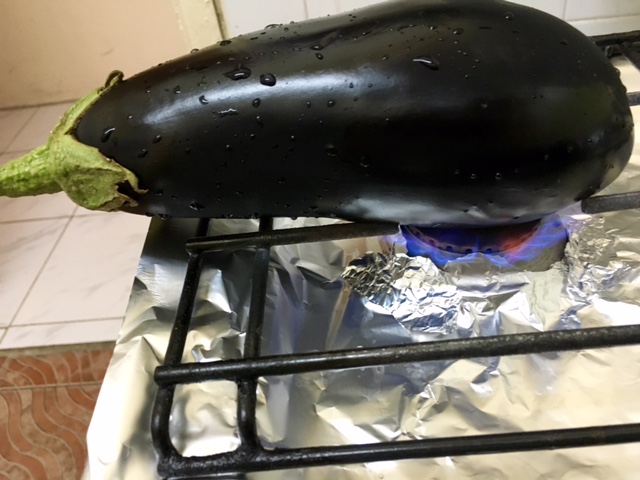
There is no other way Punjabis would have their brinjals than making a bhadta out of them! Baingan ka Bhadta is prepared by slow roasting the oval dark purple large varieties of brinjals on an open stove and then mashing up its roasted pulp to mix it with a tadka of tomatoes and onions.

Known in India as Brinjal, this smooth skinned, shiny deep purple vegetable is rich in vitamins, minerals and fibre. Alternatively called aubergine or eggplant, this is healthy enough for weight watchers as it is low in calories and has no cholesterol or fat. Buy the long oval shaped deep purple ones. The ones with lesser seeds in them will have a smooth shiny skin and will be long and light-weight.


Baingan Ka Bhadta is cooked every week at any North Indian house, and all at home can take in the fragrance of stove-top roasted brinjals. The roasted brinjals smell just so awesome! It is a spicy, dry main course eaten mostly with chapatti or paratha (griddle-fried flat bread) for lunch accompanied by raita (yoghurt-based side dish generally made with boondi or chopped/grated veggies like cucumber, onion, tomato etc). Baingan Bhadta is made in two ways. My late grandma used to make a salad dish version by mixing roasted and mashed brinjal with freshly chopped onion and tomatoes, green chili with only salt and red chili powder in it. We called it kachcha or raw bhadta and used to relish it with phulkas or chapatti or just like that with a sprinkle of lemon. Sadly that dish is no more made these days. I will try and share the full recipe for it!


Baingan Bhadta is worth all the mess it creates and the time it takes to prepare it. We need to roast the brinjal well till the purple skin chars well changing to a flaky black and the skin starts curling. My golden rule to check if the brinjal is roasted perfectly or not is by inserting a knife into roasting brinjal, if it comes out clean and without any effort its done.

Prepping Time: 10 min
Cooking Time: 30 min
Difficulty: Medium
Messy: Yes

Tip: To reduce the mess I like to line my stove top with foil paper.

Ingredients:


2 medium brinjals (600gm)
4-5 onions, finely chopped
3-4 tomatoes, finely chopped
4-5 green chilies, finely chopped
3-4 tbsp Cooking Oil
1 tsp red chili powder
salt, to taste

Method:


1) Roast over an open flame for 10-15 min or until the brinjal turns black, while turning occasionally.


 2) Keep aside to cool.


 3) Heat cooking oil in a wok and add chopped onions.


4) Until onions brown, chop the stem and discard. Now peel the skin pinching it off the brinjals and mash the brinjals. Keep aside.


5)  Keep on checking the onions and stir fry until golden brown like this.


5) Now add chopped tomatoes, green chilies and stir.


6) When tomatoes are mushy, and turned into a paste-like consistency, add red chili powder and salt. 


7) Mix and stir fry for 2 min and when you spot oil has separated from the tadka....


....add the mashed brinjal. Mash and mix properly with the kadchchi or large spoon.


Serve with hot phulkas (chapatti) or make these yummy parathas (griddle-fried flat bread) like I did!


Have you ever tried this wonderful dish?

How do you like to eat it? At home with a fluffy phulka or dhaba-style with lots of green chilies? 


Tell me how do you make your brinjal recipes? I'd love to know you cook this wonderful vegetable!

Thanks for reading! :-)